


M. Chapoutier
M. Chapoutier is one of the Rhône's biggest names, based at the foot of the Hermitage hill. The house makes wine throughout the valley, from an everyday Côtes du Rhône to Cornas and Châteauneuf-du-Pape, and works biodynamically. Here you can read how the bottles differ and what to eat with them.


From the Hermitage hill to the entire Rhône
Maison M. Chapoutier has been based in Tain-l'Hermitage, in the northern Rhône, since 1808. The town lies at the foot of the Hermitage hill, one of France's most famous vineyards. The house has its own vineyards in the north's best-known appellations, such as Hermitage, Crozes-Hermitage, Saint-Joseph and Cornas, and also buys grapes from the southern Rhône.
Two things stand out. Chapoutier has worked biodynamically in its own vineyards since the 1990s: without artificial fertilisers or chemical pesticides, and according to a fixed calendar. The labels also feature the name in braille, so blind and visually impaired people can identify the bottle. In the north, everything revolves around syrah for red wines and marsanne and viognier for white wines. In the south, grenache is the main grape, often blended with syrah. Chapoutier now also makes wine in Roussillon, in southern France.
In brief
Seven bottles, from Côtes du Rhône to Condrieu
At the bottom are the everyday Côtes du Rhône wines, with grenache from the south. Then come the syrah wines from the north, a Châteauneuf-du-Pape and the white Condrieu.

Côtes du Rhône
The house's entry-level wine: grenache and syrah from the southern Rhône. Red fruit, herbs and a smooth structure.

Côtes du Rhône Blanc
White Côtes du Rhône made from grenache blanc, clairette and bourboulenc. Full-bodied and soft, with yellow fruit.
Crozes-Hermitage
Syrah from the appellation bordering the Hermitage hill. Dark fruit, black pepper and a fresh, juicy style.

Saint-Joseph
Syrah from the west bank of the Rhône. Blackberries, violets and pepper, with a firm yet refined structure.

Cornas
Cornas is always red and always syrah. One of the most powerful wines of the northern Rhône, dark and robust.

Châteauneuf-du-Pape Les Grands Merisiers
Biodynamic Châteauneuf-du-Pape from a single vineyard: mainly grenache, with syrah and mourvèdre. Spicy, with red fruit and licorice.

Condrieu
Condrieu is the home of viognier. Full-bodied and aromatic, with apricot, peach and flowers.
What is the difference between the northern and southern Rhône? You can read about it on our Rhône page.
Dark fruit, pepper and herbs
Blackberries & pepper
Northern Rhône Syrah smells of blackberries, blackcurrants, violets and black pepper. Grenache from the south instead brings red fruit, strawberry and dried herbs such as thyme and rosemary.
Juicy to powerful
A Crozes-Hermitage is juicy and fresh, while a Cornas or Châteauneuf-du-Pape is full-bodied and powerful. The white wines are round and full-bodied, with low acidity and a highly aromatic character.
Spicy and long
The red wines finish spicy, with pepper and dark fruit. In the top wines, this lingers for a long time. The whites finish softly, with stone fruit and honey.
Flavor profile of a Crozes-Hermitage. Cornas and Châteauneuf-du-Pape score higher in power; the Côtes du Rhône is lighter and smoother.
How to serve Chapoutier
Red just below room temperature, white chilled but not ice-cold. A young Cornas or Châteauneuf benefits from being allowed to breathe first.
Red at 15 to 18 degrees
Serve a Côtes du Rhône or Crozes-Hermitage at around 15 to 16 degrees; this keeps it juicy. Saint-Joseph, Cornas, and Châteauneuf-du-Pape can be served closer to 18 degrees. Serving these wines too warm makes them heavy, as they contain 14% alcohol or more. Drink the light Rouge Clair chilled.
More about wine temperature →Let Cornas breathe
A young Cornas or Châteauneuf-du-Pape is powerful and often still closed. Pour it into a decanter half an hour to an hour beforehand. Older bottles may have sediment: stand them upright a day in advance.
Decanters →White wine not too cold
Full-bodied white Rhône wine made with marsanne or viognier tastes best at 10 to 12 degrees. If you serve it ice-cold, the aromas and roundness disappear. Take the bottle out of the refrigerator fifteen minutes before serving.
More about decanting →Chapoutier at the table
Rhône wine is spicy, making it a good partner for dishes with herbs, grilled meat, and stews.
Drinks and bistro
Pâté, charcuterie, pasta, pizza, or a roast chicken. Smooth enough for drinks, full-bodied enough for a weekday meal.
Grill and game
Lamb chops, duck, pepper steak, or a game stew. The peppery syrah pairs well with meat that has a crust.
Stews and herbs
Stews, pulled pork, cassoulet, or vegetarian dishes with thyme and rosemary.
Creamy and aromatic
Chicken or fish in a cream sauce with Côtes du Rhône Blanc, Middle Eastern dishes with Saint-Joseph Blanc, and lobster or Asian food with Condrieu.
The right glass for M. Chapoutier
Pour syrah and grenache into a large red wine glass so the spicy aromas can develop. For Cornas and Châteauneuf-du-Pape, choose a tall, large bowl. Full-bodied white wines are best served in an all-round wine glass. These are the glasses we recommend ourselves.


Everything you still wanted to know about M. Chapoutier
Can't find your question here? Read more about wine and food, or get in touch.
Wine and food →What is M. Chapoutier?
Why is there braille on Chapoutier's labels?
Which grapes does Chapoutier use?
How much alcohol is in Chapoutier wine?
What is the difference between Crozes-Hermitage and Hermitage?
What do you eat with Chapoutier?
Buy M. Chapoutier
Want the bottle delivered straight to your home? Order M. Chapoutier online from Gall & Gall. Gall & Gall has 15 in stock.

M. Chapoutier Lubéron Blanc

M. Chapoutier Luberon Rouge

M. Chapoutier Rouge Clair
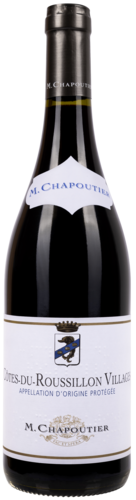
M. Chapoutier Côtes-Du-Roussillon Villages Rouge
Prices as of October 9, 2026, as provided by Gall & Gall. You can find the current price and stock at Gall & Gall. Glazen.nl receives a small commission if you buy something through these links; you pay nothing extra. No 18, no alcohol.