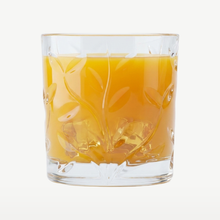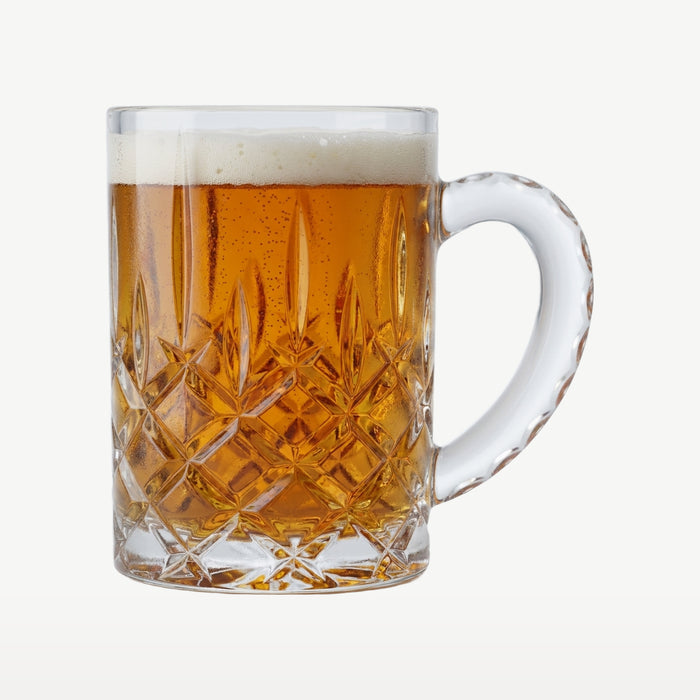
Nachtmann Noblesse Beer Glass 60 Cl - 6 Pieces
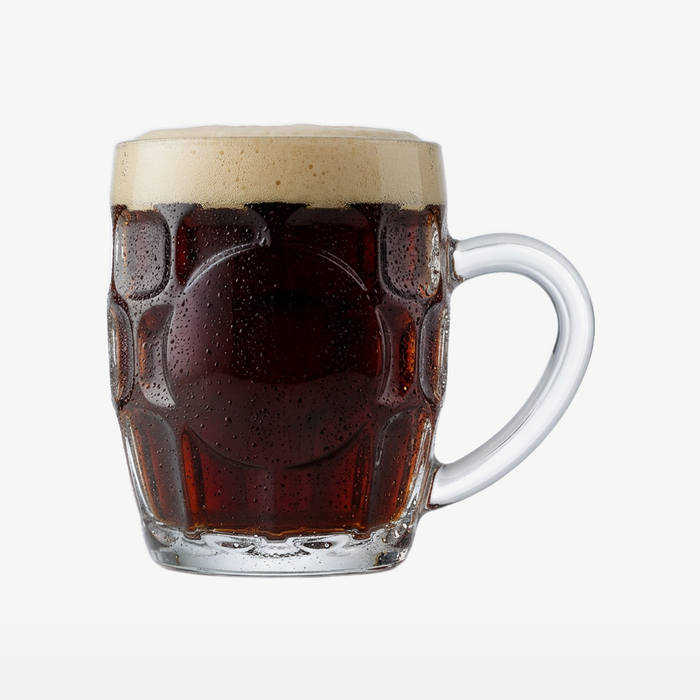
Arcoroc Bock Brit Beer Glass 56 Cl - 24 Pieces
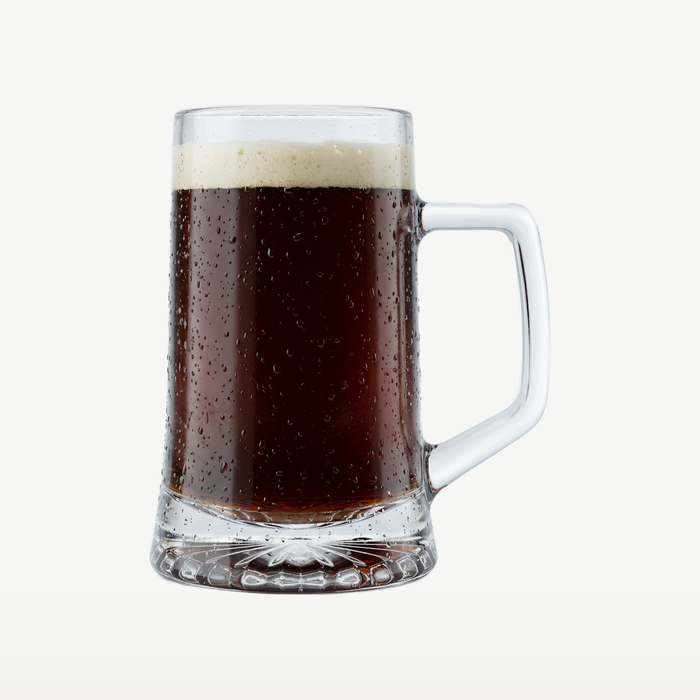
Bormioli Rocco Stern 400 Beer Glass 40 Cl - 6 Pieces

How to pour
a porter in
Rinse the glass with cold water and leave it wet. Foam clings to a wet, grease-free surface. If you’ve rubbed the glass dry with a tea towel, there’s grease on it and the head collapses straight away.
Hold the glass at an angle, about forty-five degrees, and let the porter run gently down the side until it’s three-quarters full. Less carbonation escapes this way than when you pour straight onto the bottom.
Set the glass upright and wait half a minute. The large bubbles settle. What remains is finer, sturdier foam, and that holds onto the aroma.
Pour with the glass upright until the head rises a centimeter above the rim. Smooth it flat if you like. If there’s sediment at the bottom of the bottle, leave the last finger-width behind. That keeps your beer clear.
What did you think of this explanation?
One click on a star is enough. If you want to add something, we’ll read it first before it appears here.
Save this page
Send this page to your own email so you’ll have the information handy when you’re ready to pour. You’ll also get a € 5 discount code on orders over € 50, for the glasses that go with it.
The story
Porter originated in eighteenth-century London. Its name comes from the porters who carried goods in the city’s markets and docks. It was the first dark beer to be brewed in large quantities. Stout developed from it. A stout porter was simply a stronger version of the same beer. Only later did the names diverge, and even today the distinction isn’t clear-cut. Brewers generally follow this rule of thumb: porter is made with malted barley, while stout is often made with unmalted roasted barley, making it drier and sharper.
The right glass
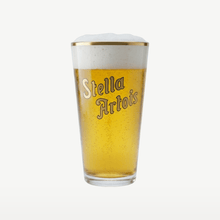
Porter doesn’t have a glass of its own. It’s served in the same glass as stout. In English pubs, that’s a nonic, a straight-sided glass with a bulge just below the rim. We don’t have that model. The closest thing is a straight-sided 40-centiliter pub glass with a rim that curves slightly inward. This keeps the foam compact. If you want to bring out the caramel and chocolate aromas, choose a rounded craft beer goblet. Looking for a glass with a handle? Take a look at our beer mugs.

Arcoroc Willi Beaker Beer Glass 40 cl (12 pieces)

Stölzle Lausitz Craft Beer Glass 43 cl (6 pieces)
Both sets together € 52,90.
The right tools
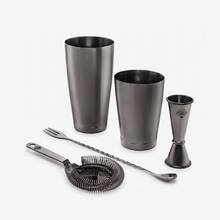
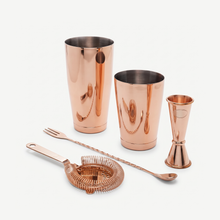
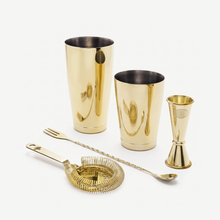
For a porter, you really don’t need anything besides the glass, although you might use a bar spoon to carefully layer a dark beer over a lighter one, and a jigger to measure a splash for a boilermaker. These are the bar tools we use ourselves; you’ll find everything in our bar tools & cocktail sets.


Glass set (our pick 01) + 2 bar tools together € 43,85.
Which spirits go with this?
The porter itself takes center stage; here’s what you can pair with it. Liqueur goes well with its caramel and chocolate notes. Popular bottles include Baileys and Kahlúa. Each drinks page tells you the alcohol percentage, what it tastes like, which cocktails it works in and what glass you’ll need.


Variations & twists
Baltic porter is the strongest branch of the family. Around the Baltic Sea, brewers made porter with bottom-fermenting yeast at a lower temperature. This creates a smoother, less fruity beer of roughly seven to nine percent alcohol. English porter is lighter, at around four to six percent. Robust porter sits between the two and, with its roasted bitterness, is closest to a stout. To read more, see all drinks and brands.
Serving tip
Serve it between eight and thirteen degrees. Any colder and the caramel disappears, leaving only the bitterness of the roasted malt. If there’s sediment at the bottom, leave the last little bit in the bottle. Pair it with nuts, aged cheese or a piece of dark chocolate.
Good to know
What is the difference between porter and stout?
There used to be no difference. Stout was simply the name for a stronger porter. The names later grew apart, but there’s still no hard line between them. Today, porter is said to use malted barley, while stout often uses unmalted roasted barley. That makes stout drier and sharper.
Where does the name porter come from?
Named after the porters, the men who hauled goods at London markets and docks. In 18th-century London, this was their beer. When it became popular beyond the city, the name stuck.
What is a Baltic porter?
A porter brewed around the Baltic Sea, with bottom-fermenting yeast and at a lower fermentation temperature. This makes it smoother and less fruity. It's usually stronger than an English porter too, at roughly seven to nine percent ABV.
At what temperature should you serve a porter?
Between eight and thirteen degrees. If it's colder, the aroma is muted and you mainly taste bitterness. Above thirteen degrees, the alcohol takes over.
What glass goes well with a porter?
The same glass as for stout. Straight and spacious, without a stem, with a rim that curves slightly inward to keep the foam compact. A rounded craft beer glass works too and lets you smell more.
Frequently asked questions
What is the difference between porter and stout?
Stout was originally the name for a stronger porter, so in the past they were the same beer. The rule of thumb now is that porter uses malted barley, while stout often uses unmalted roasted barley. This makes stout drier and sharper. Even today, there is no hard-and-fast distinction.
How much alcohol is in a porter?
English porter is usually between four and six percent ABV. Baltic porter is stronger, at roughly seven to nine percent.
What glass do you use for a porter?
Choose a straight, spacious beer glass of forty centiliters or more, without a stem and with a rim that curves slightly inward. A rounded craft beer glass works too. It helps the caramel and chocolate notes linger.
Where does porter come from?
From London in the eighteenth century. The name comes from the porters, the carriers in the city's markets and docks.
Everything for your bar,
to one address
Hospitality-quality glasses, sold in sets. Order today, delivered fast.
Shop the glasses →