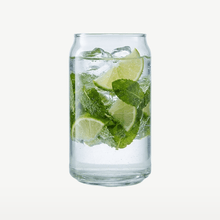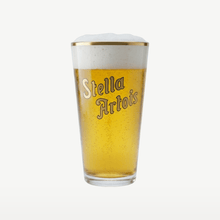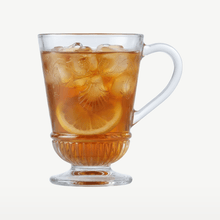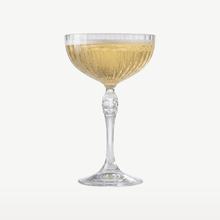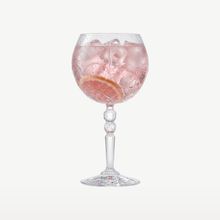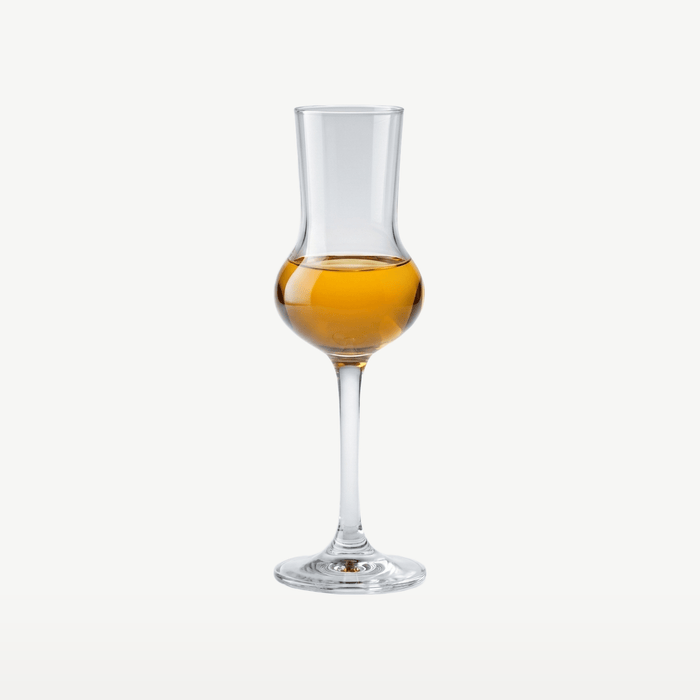
Bormioli Rocco Restaurant Liqueur Glass 8,1 Cl Grappa - 3 Pieces
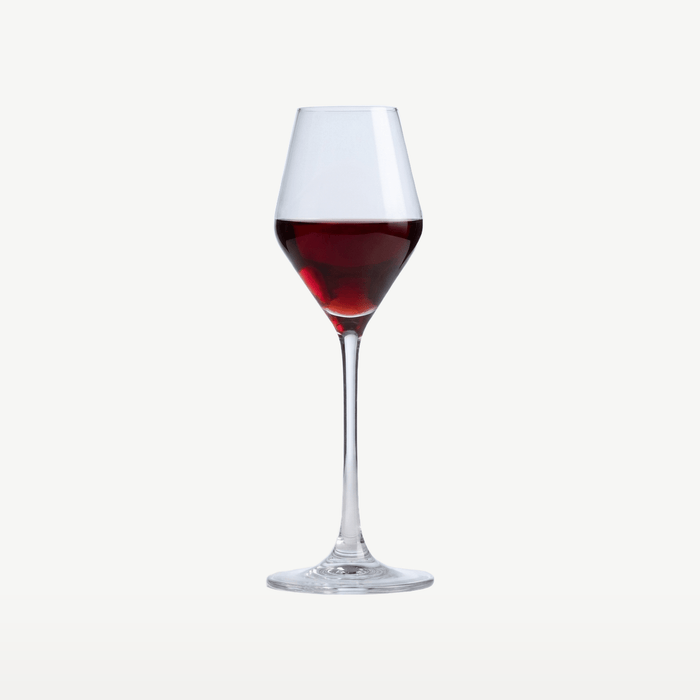
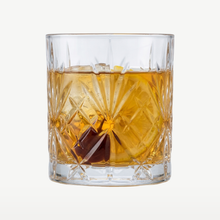
Royal Leerdam Carre Sherry Glass 14 Cl - 6 Pieces

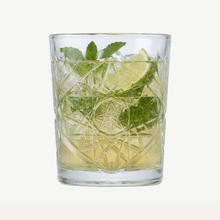
Bormioli Rocco America'20S Liqueur Glass 14 Cl Nick and Nora - 6 Pieces
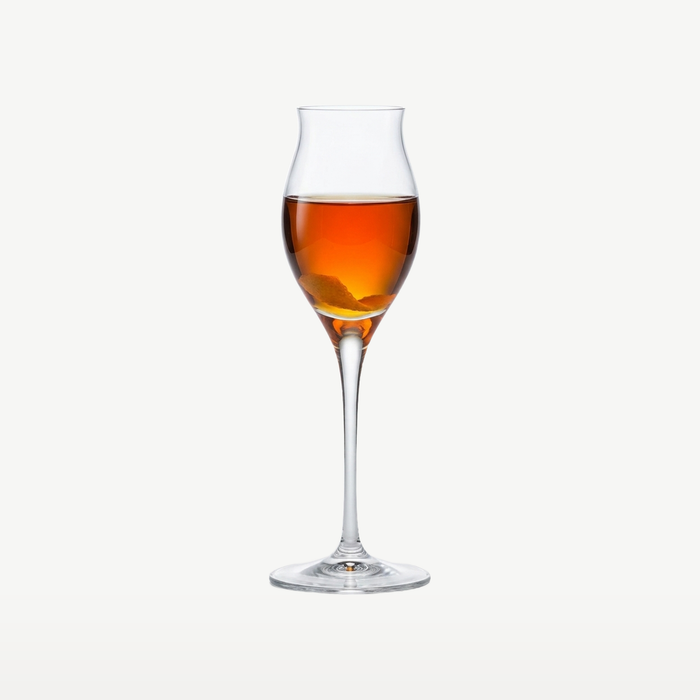
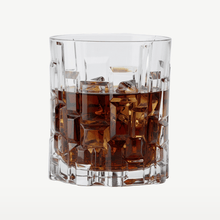
RCR Invino Liqueur Glass 10 Cl - 6 Pieces

How to pour
a grappa in
Have a small tulip-shaped stemmed glass ready. Chill a young grappa to 10 to 15 degrees; serve an aged one warmer, closer to room temperature.
Pour 4 cl and hold the glass by the stem so your hand doesn't warm the drink.
Grappa is served neat, without ice or a mixer. In Italy, it's served after a meal, after coffee; this is called ammazzacaffè.
To make a caffè corretto, pour 2 cl of grappa into a fresh 2.5 cl espresso and stir briefly.
What did you think of this guide?
One click on a star is enough. If you'd like to add a comment, we'll review it before it appears here.
Save this page
Email this page to yourself so you’ll have the information handy when it’s time to pour. You’ll also get a € 5 discount code on orders of € 50 or more, for the glasses that go with it.
The story
When grapes are pressed for wine, they leave behind a moist pomace of skins, seeds, and stems. In Italy, that vinaccia isn’t discarded but goes into the still, where it becomes grappa. Since it contains hardly any juice, the pomace is usually steam-distilled, which requires careful work: distilling too hard results in bitter notes. Young grappa is then aged in steel and remains clear. Leave it in wood and, over time, it becomes amber-colored invecchiata, or riserva if it stays there even longer. Monovarietal grappa is made from a single grape variety, such as moscato or nebbiolo.
The right glass
Grappa is served in a small stemmed glass with a tulip-shaped bowl: rounded at the bottom to collect the aroma, with a slightly narrowed neck that directs the alcohol vapors past your nose rather than straight into it. The stem isn’t just decorative; holding the glass by the stem keeps your hand from warming the drink. Eight to ten centiliters is plenty, since you only pour a few centiliters. Both sets below are also part of our liqueur glasses.

Chef & Sommelier Spirits Grappa Liqueur Glass 10 cl (6 pieces)

Nude Glass Pure Grappa Glass 8 cl (6 pieces)
Both sets together € 74,90.
The right tools
For grappa, you’ll need a glass, a jigger to measure out four centiliters, and a bar spoon to stir the shot into your espresso. These are the bar tools we use ourselves; you’ll find them all in our bar tools & cocktail sets.


Glass set (our pick 01) + 2 bar tools together € 59,85.
What does this go with?
Grappa isn’t in our drinks guide yet. These are the bottles that come closest: the wine left after the pomace is pressed, the grapes used to make monovarietal grappa, and the Italian bottles that sit beside it on the table. On each drink page, you can read about its alcohol percentage, flavor, suitable cocktails, and the glass you need.


Variations & twists
Giovane and invecchiata are the two main styles: clear from steel versus amber-colored from wood, with a riserva spending even longer in the cask. There is also monovarietal grappa made from a single grape variety, such as moscato or nebbiolo, whose character you can smell. And there is grappa aromatizzata, infused with herbs or fruit, such as the version with a sprig of rue in the bottle. Want to read more? See all drinks and brands.
Serving tip
Serve young grappa at 10 to 15 degrees and aged grappa slightly warmer, closer to room temperature. Hold the glass by the stem. In Italy, grappa is served after a meal, after coffee; this is called ammazzacaffè, while adding a splash to espresso is called caffè corretto.
Good to know
What is vinaccia?
The pomace left over after grapes are pressed for wine: skins, seeds, and stems, with some moisture still in them. This mass is the raw material for grappa. Because it contains little juice, steam is usually used instead of a standard pot still.
Can anything be called grappa?
No. The name is protected and may only be used for products from Italy, as well as from the Italian cantons of Switzerland and San Marino. Similar spirits from France are called marc, from Spain orujo, and from Portugal bagaceira.
Giovane, invecchiata, or riserva?
Giovane is young grappa that rests in steel after distillation and remains clear. Invecchiata has been aged in wood, giving it an amber color; a riserva has been aged even longer. Young grappa tastes sharper and more grape-like, while aged grappa is rounder and more oaky.
What is monovarietal grappa?
Grappa made from the pomace of a single grape variety, such as moscato, nebbiolo, or pinot. The grape is named on the label. Since only one variety is used, you can recognize its character in the aroma.
Caffè corretto or ammazzacaffè?
A caffè corretto is an espresso with a splash of spirits, often grappa. An ammazzacaffè is the small glass served after coffee, on its own. Both are part of the end of an Italian meal.
At what temperature should you serve grappa?
A young grappa should be served at around 10 to 15 degrees, lightly chilled but not ice-cold. Serve an aged grappa warmer, closer to room temperature, so the wood comes through more clearly. Too cold, and an aged grappa tastes flat.
Frequently asked questions
What is grappa made from?
Made from vinaccia, the grape pomace of skins, seeds, and stems left over after pressing grapes for wine. The pomace is distilled, so grappa is not a wine distillate but a pomace distillate.
How strong is grappa?
Usually around 40 percent alcohol, sometimes slightly higher. It is always stated on the label. Grappa is served neat, in portions of a few centiliters.
Which glass is used for grappa?
A small tulip-shaped glass on a stem, holding about eight to ten centiliters. The rounded bowl gathers the aroma, and the narrow neck directs the alcohol vapors away; the stem keeps your hand away from the drink.
What is the difference between grappa and marc?
There is little difference in the basics: both are distilled from grape pomace. The difference lies in their origin and name. Grappa comes from Italy, marc from France, and each country has its own rules and style.
Buy grappa
Want the bottle delivered straight to your door? Order grappa online from Gall & Gall. Gall & Gall has 17 varieties.
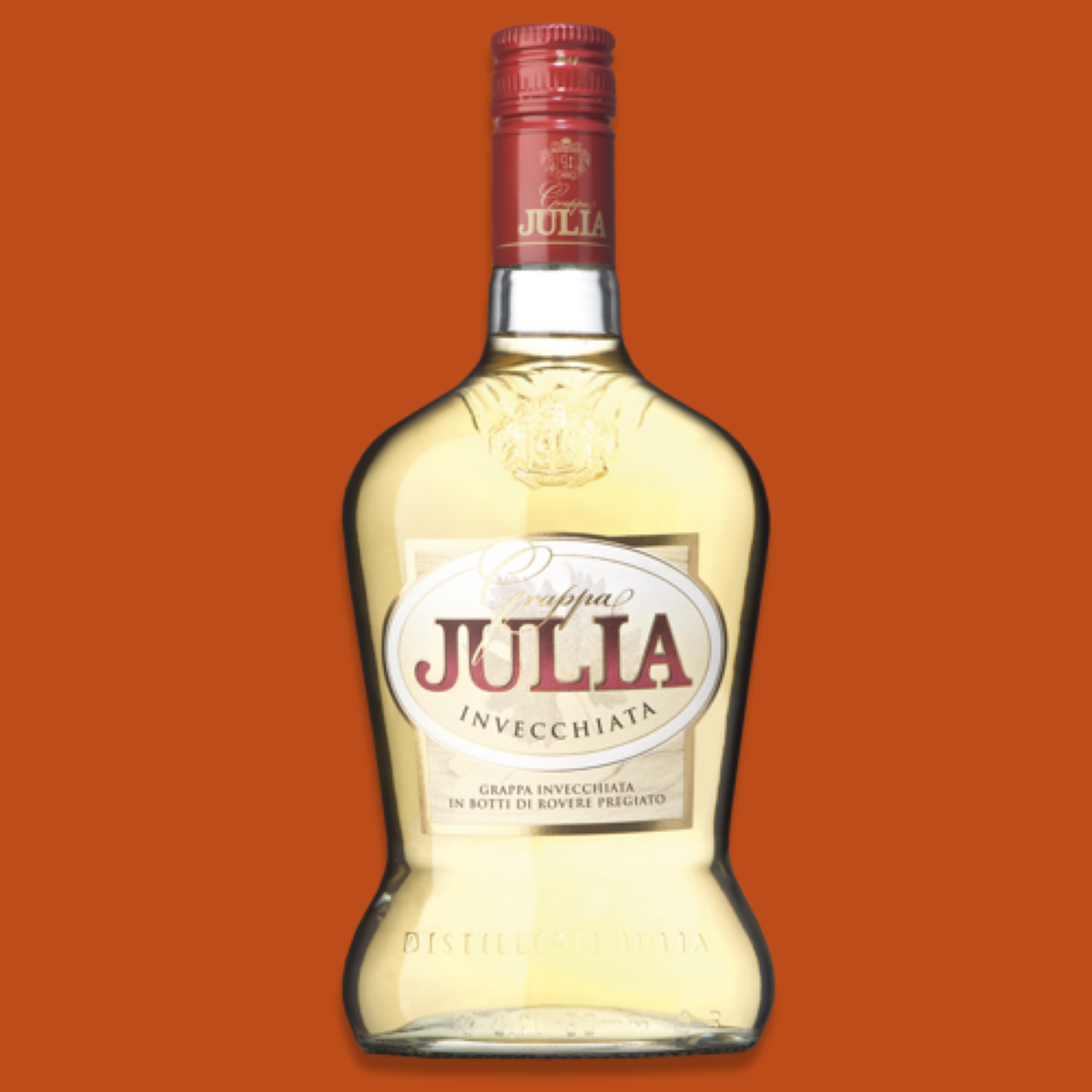
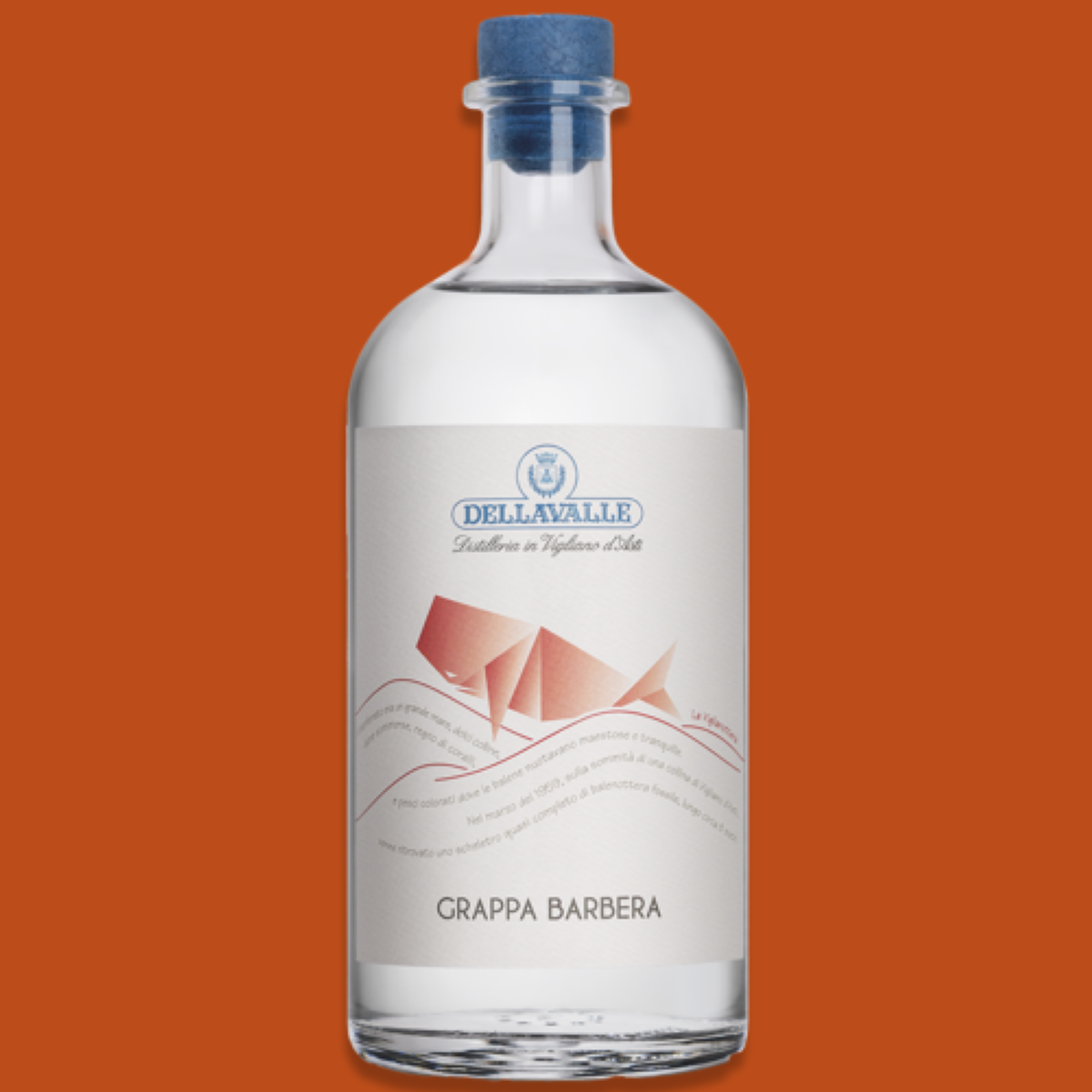
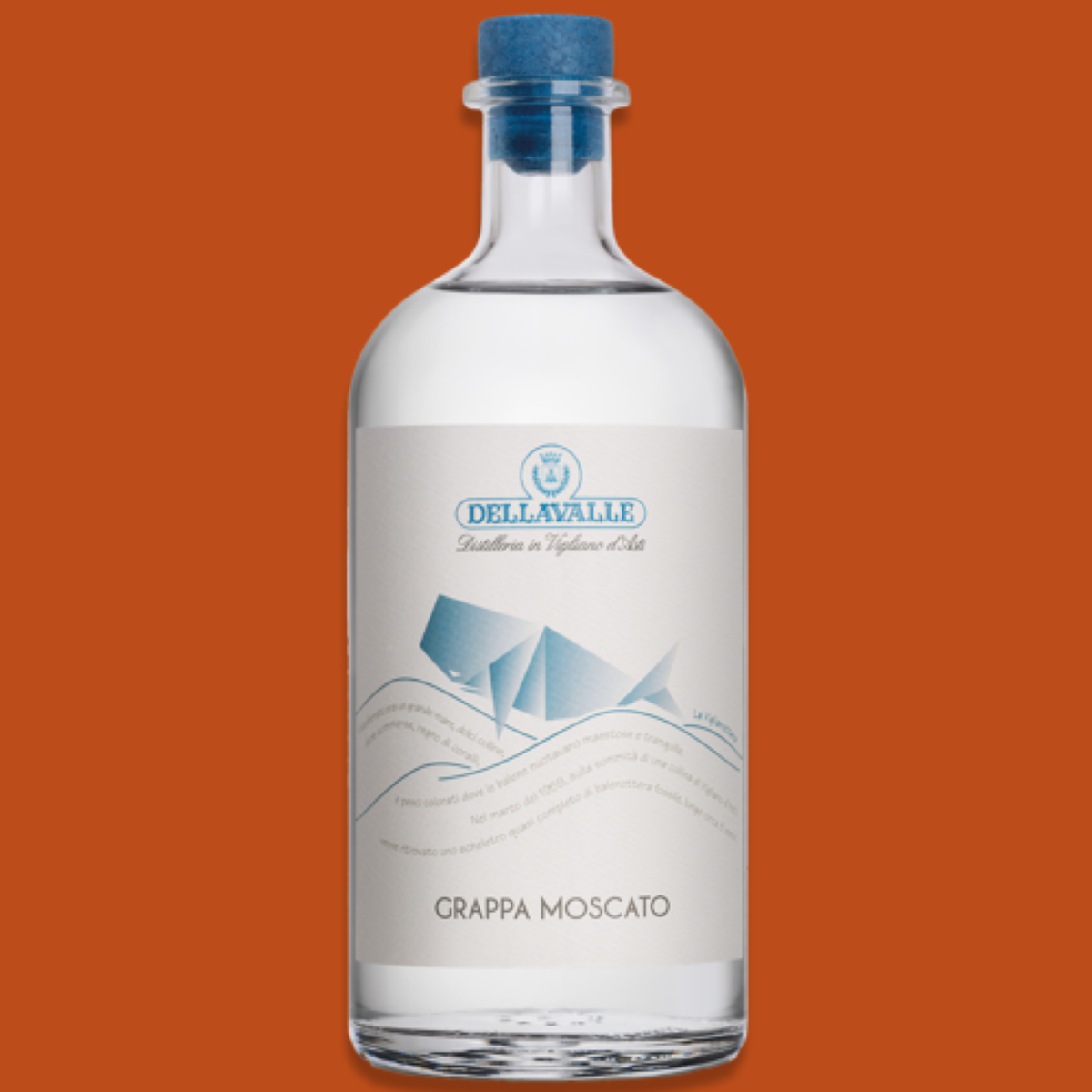
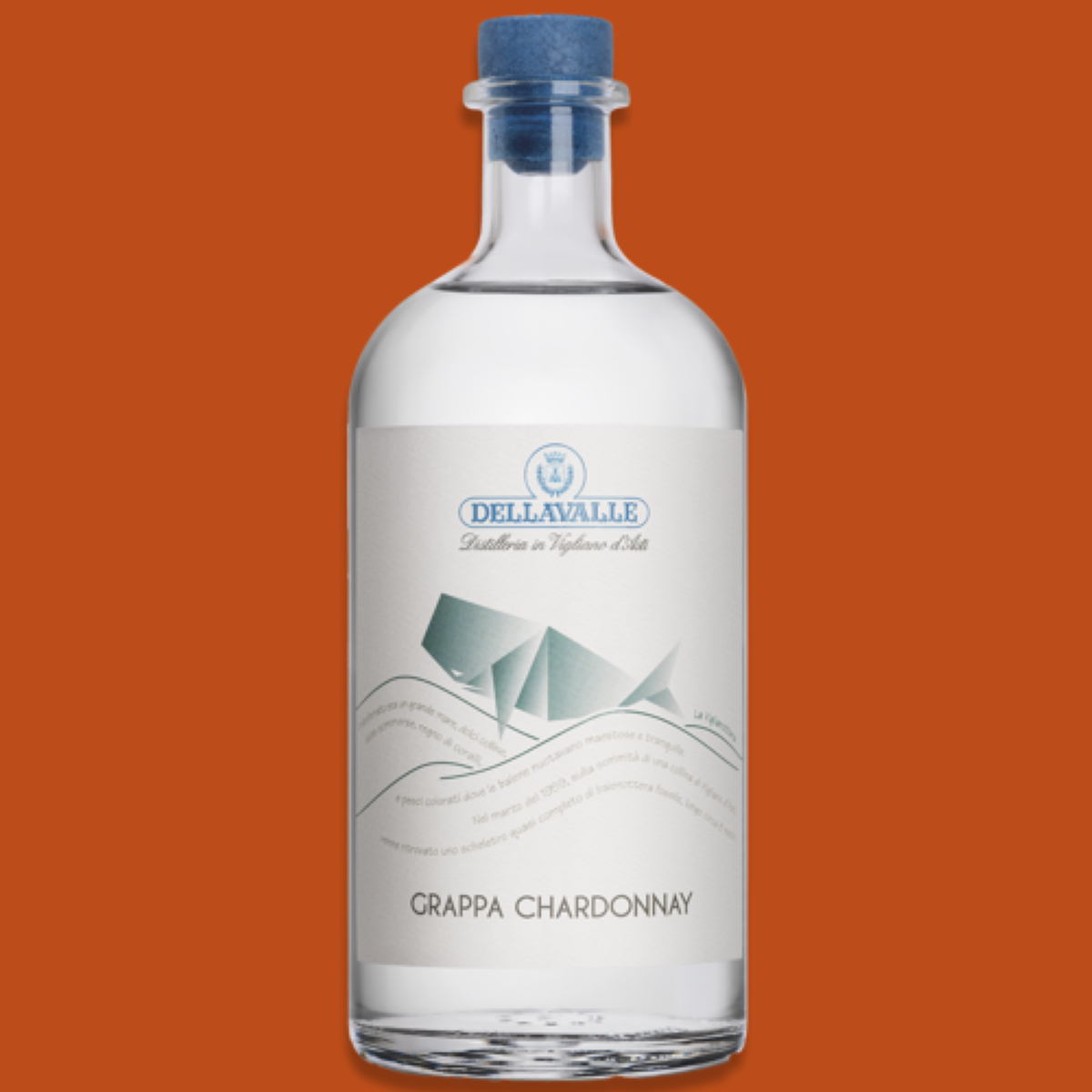
Prices as of November 22, 2026, as reported by Gall & Gall. You can see the current price and stock at Gall & Gall. Glazen.nl receives a small commission if you buy something through these links; you pay nothing extra. No one under 18, no alcohol.
Everything for your bar,
at one address
Restaurant-quality glasses, sold in sets. Order today and get them delivered quickly.
Shop glasses →